Cape Sounion Tour: The Temple of Poseidon, Ancient Silver Mines & the Athenian Riviera
The Cape Sounion tour is one of the most rewarding half-day journeys you can take from Athens — a drive along one of the most beautiful coastlines in the Mediterranean, ending at a marble temple perched on the edge of a cliff above the Aegean Sea. Along the way, two extraordinary stories unfold: one of silver, naval power, and the battle that saved Greek civilization, and one of myth, tragedy, and a king who watched the wrong sails approaching from the very cape where you'll be standing.
The Drive — Along the Athenian Riviera
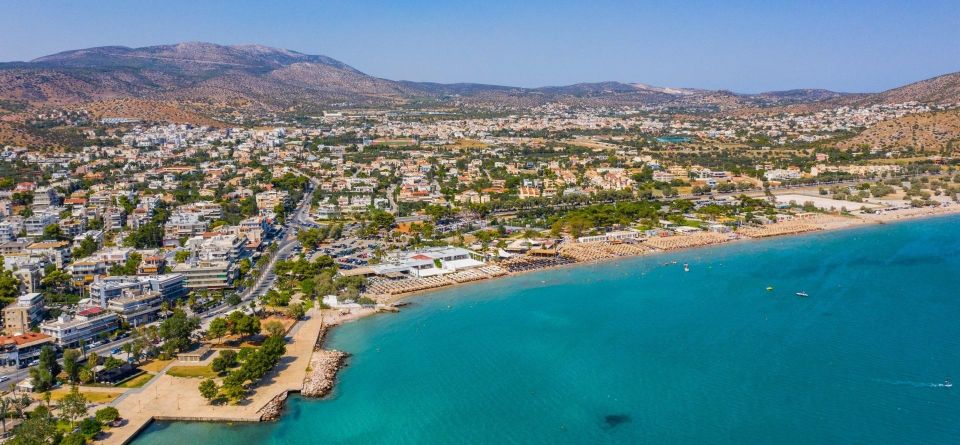
The tour follows the coastal road south of Athens, passing through the elegant suburbs of Glyfada, Vouliagmeni, and Varkiza — collectively known as the Athenian Riviera. The Saronic Gulf opens on your left as the city gives way to pine-covered hillsides and stretches of clear water. It is one of the most scenic drives in Attica, and it sets exactly the right tone for what lies ahead.
The Silver Mines of Lavrion — How Athens Became a Naval Superpower
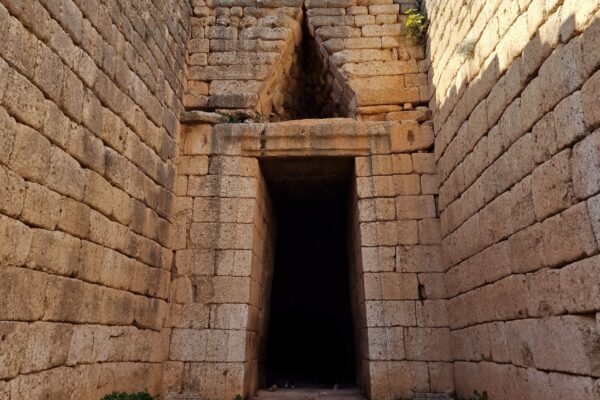
Before you reach Cape Sounion, your guide will tell you one of the most consequential stories in ancient Athenian history — one that begins not with temples or philosophers, but with silver. In the hills inland from the cape lies Lavrion, where the Athenians mined one of the richest silver deposits in the ancient world. The mines were worked by thousands of slaves, and the revenue they generated funded the building of the city's walls, its water supply, and the Temple of Olympian Zeus.
Then, in the early 5th century BC, a new and larger seam of silver was discovered. The Athenian general and statesman Themistocles stepped forward with a bold proposal: rather than distributing the windfall among the citizens as a cash payment — which was the expectation — Athens should use every drachma to build a fleet of 200 trireme warships.
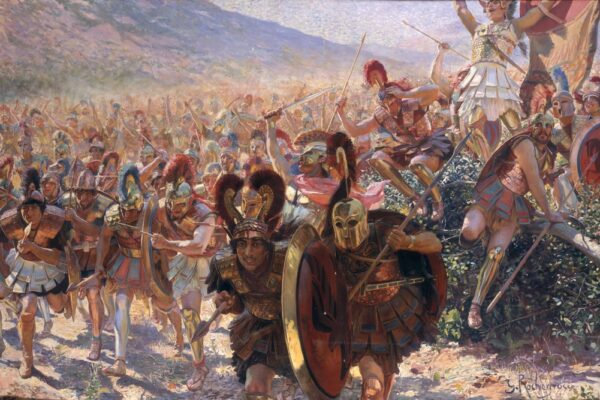
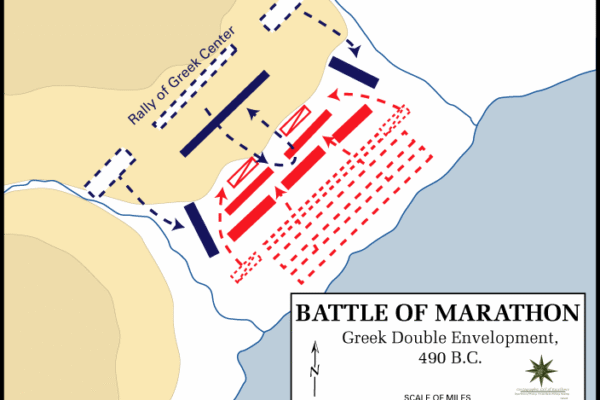
His argument was simple and visionary: a naval superpower could not be conquered. The citizens agreed. That decision proved decisive at the Battle of Salamis in 480 BC, where the Athenian fleet destroyed the Persian navy and ended Xerxes' invasion of Greece. Our blog has a full account of the life of
Themistocles for those who want to follow that story further.
It was Pericles — the statesman who succeeded Themistocles — who then launched the great building program that produced the Acropolis, the Temple of Hephaestus, and the Temple of Poseidon at Cape Sounion itself.
The Temple of Poseidon — Where Myth Meets the Sea
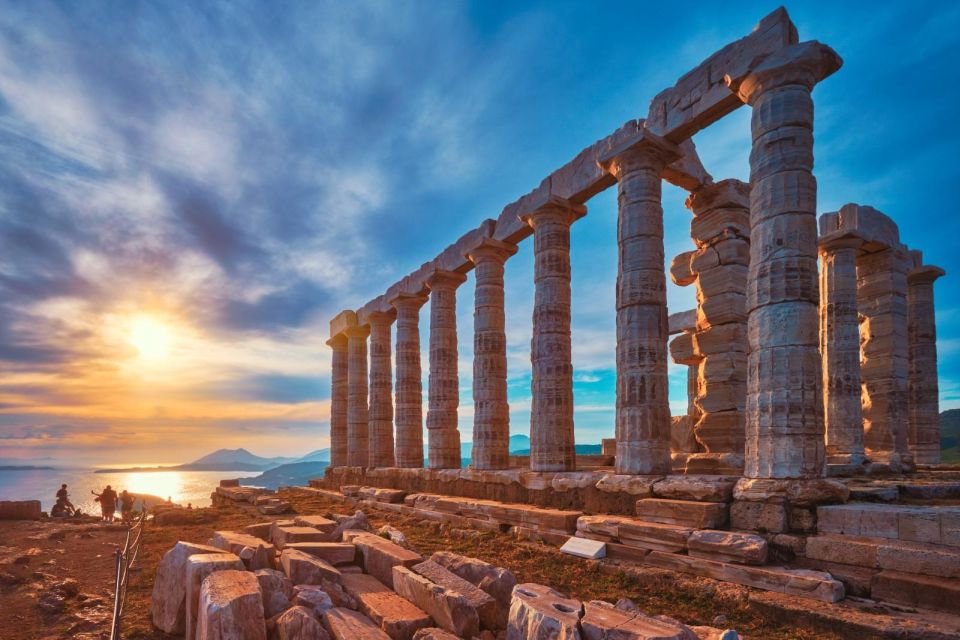
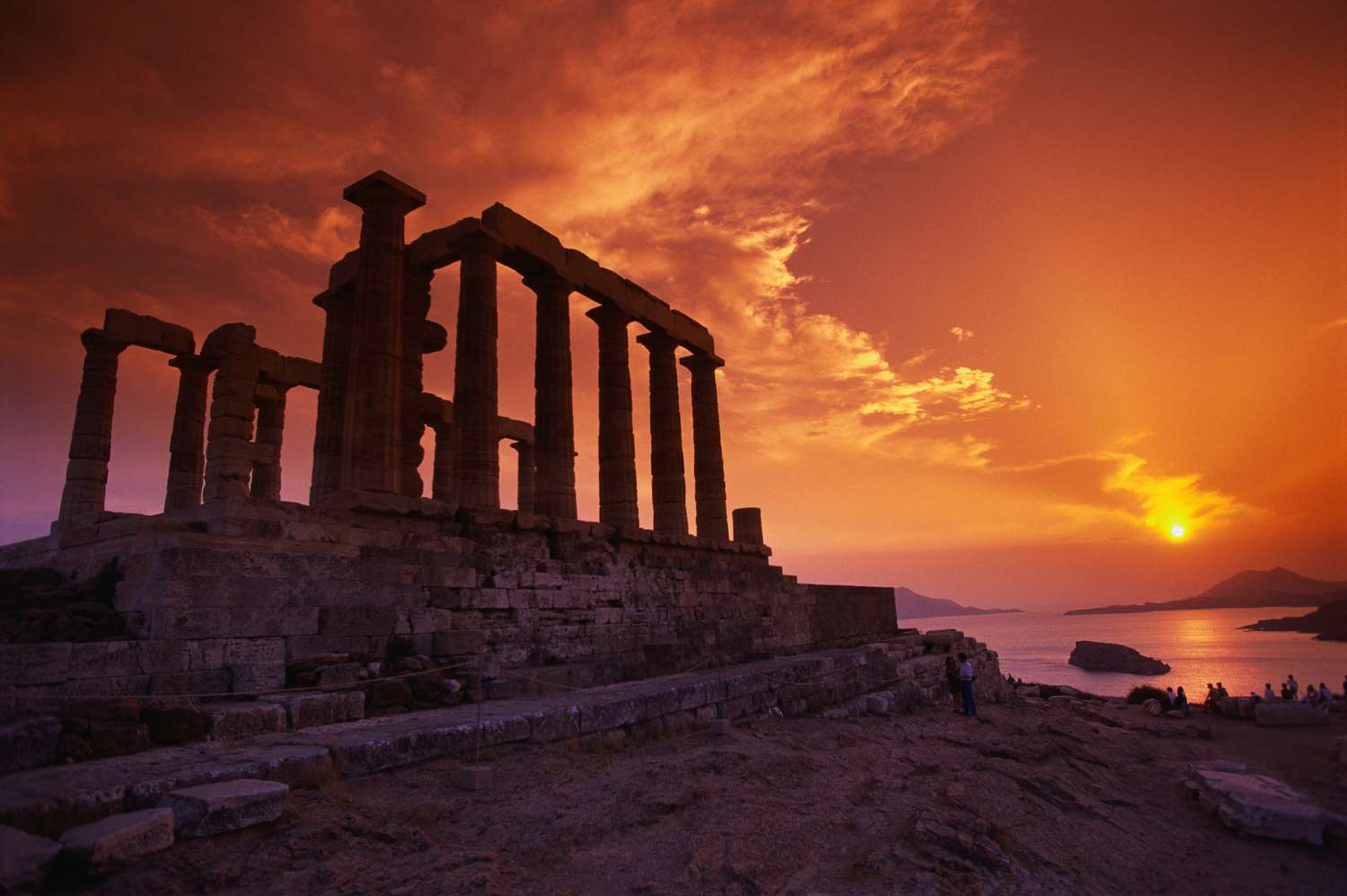
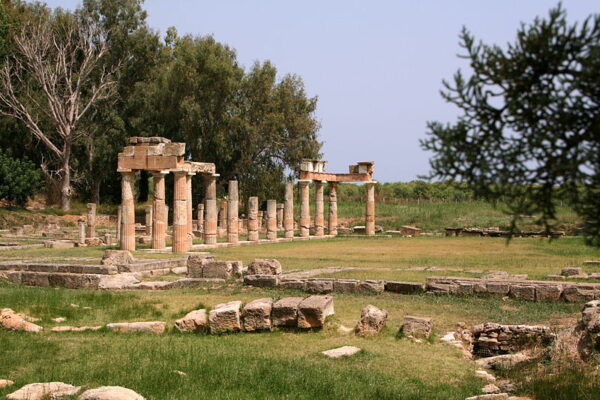
Standing on the southernmost tip of the Attic peninsula, 60 meters above the sea, the Temple of Poseidon is one of the great views in Greece. Built around 444 BC in gleaming white Doric marble, it was designed as a landmark for sailors navigating the waters between the Aegean and the Saronic Gulf — a visible declaration that this promontory belonged to the god of the sea.
Of its original 34 columns, 15 remain standing, and the quality of the marble and the precision of the construction are visible even now, nearly 2,500 years later. Look closely at one of the columns, and you'll find the name "Byron" carved into the stone — the English poet visited in 1810 and left his mark, as travelers of that era were inclined to do.
The mythology connected to this place is equally powerful. It was from this cliff that King Aegeus of Athens watched for the return of his son Theseus, who had sailed to Crete to kill the Minotaur. The arrangement between them was clear: if Theseus succeeded, he would change his ship's sails from black to white on the return voyage.
He succeeded — he killed the Minotaur with the help of Ariadne, the Cretan king's daughter, who gave him a thread to find his way out of the Labyrinth — but in the elation of his victory, he forgot to change the sails. Aegeus, seeing black sails on the horizon, believed his son was dead. He threw himself from the cliff into the sea below. That sea has carried his name ever since: the Aegean.
The sunset at Cape Sounion, with the temple columns turning amber against the darkening sky and the sea stretching to the horizon below, is among the most celebrated in Greece.
Lake Vouliagmeni — A Natural Spa Unlike Anything Else on the Riviera
On the return drive, the tour stops at
Lake Vouliagmeni — one of the most unusual natural formations in Attica and a completely unexpected end to the day. The lake was created thousands of years ago when the roof of a vast underground cavern collapsed, leaving an oval lagoon enclosed by limestone cliffs, fed by both underground thermal springs from Mount Hymettus and the tidal waters of the Aegean.
The result is a body of water that maintains a constant temperature of 22 to 29°C year-round — warm enough to swim in January — and carries a mineral composition rich in iron, calcium, and potassium. It is part of Greece's national NATURA 2000 protected wetland network and is classified as an Area of Outstanding Natural Beauty.
The lake is home to Garra Rufa fish — the small fish used in spa treatments worldwide — which naturally inhabit the shallower waters and provide a gentle natural exfoliation for anyone willing to stand still long enough. Pine trees shade the limestone banks. A restaurant sits at the water's edge. After a morning of ancient temples and mythological tragedy, it is one of the most pleasant places in Greece to simply sit, swim, and do nothing at all.
Book your
Cape Sounion tour today — and experience one of the most beautiful stretches of Attic coastline, one of Greece's most dramatic ancient temples, and the story of how silver mines once saved Western civilization.