Marathon Tour From Athens
Marathon Tour from Athens: History, Myth & the Race That Changed the World!
The Marathon tour from Athens is one of the most rewarding half-day journeys you can take from the city — and one of the most underrated. Within a short drive of the center, you stand at the burial mound of 192 Athenian soldiers whose courage in 490 BC helped keep democracy alive long enough to shape the entire Western world. Then, a few kilometers further along the eastern Attic coast, you arrive at one of the most serene and atmospheric ancient sanctuaries in all of Greece — the Temple of Artemis at Vravrona, a site bound up with one of mythology's most haunting stories.
Two stops. Two completely different worlds. Both are utterly worth your time.
The Battle of Marathon — A Turning Point in World History
The Marathon Tomb — Where 192 Heroes Are Buried
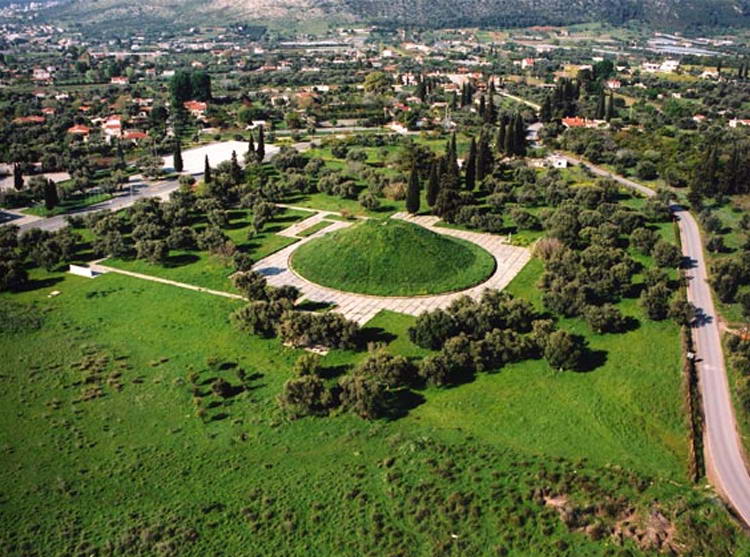
The tour's first stop is the Soros — the burial mound of the 192 Athenian hoplites who died at the Battle of Marathon in 490 BC. This low, grassy mound on the coastal plain is one of the most emotionally direct monuments in Greece. There is no grand architecture, no columns, no museum entrance fee. Just a mound of earth, 12 meters high, raised over the bodies of men who were buried where they fell on the same afternoon they won. In ancient Greece, fallen soldiers were almost always brought home for burial. The decision to bury the Marathon dead on the battlefield itself was a rare and deliberate honor — a statement that the ground they stood on was sacred.
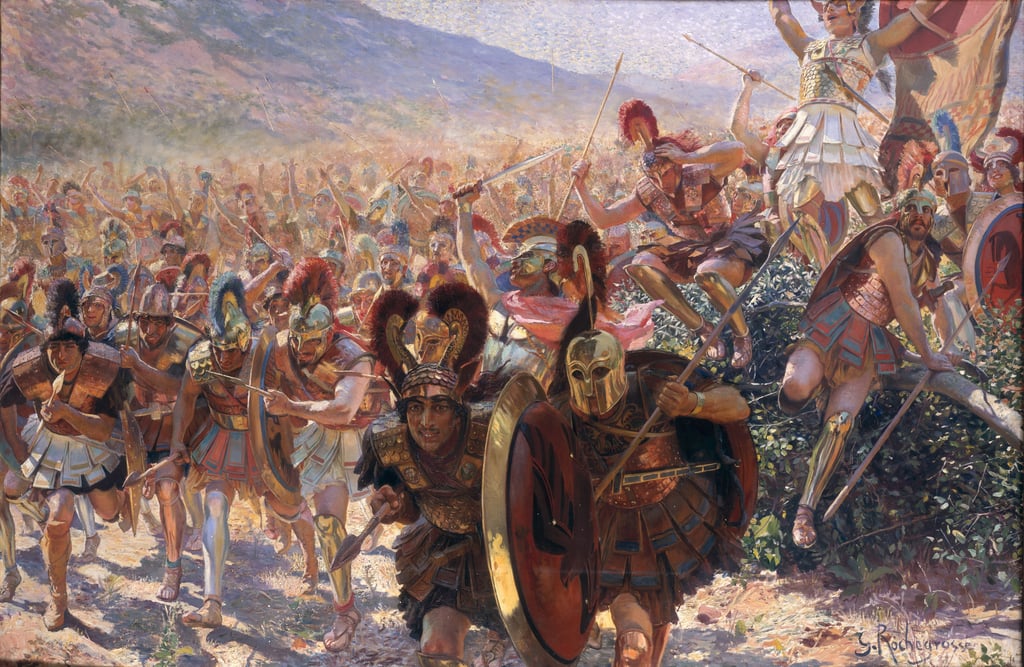
What happened here deserves to be understood properly, because it was genuinely one of the hinge moments of ancient history. In September 490 BC, a Persian force — which Herodotus, the father of history, estimated at around 500,000 men (a figure modern historians consider an exaggeration, though the Persian force vastly outnumbered the Greeks) — landed on the plain of Marathon with the intention of marching on Athens and ending the experiment of democracy before it had properly begun. The Athenian army numbered around 10,000 hoplites, bolstered by 1,000 soldiers from the allied city of Plataea. No one else came to help.
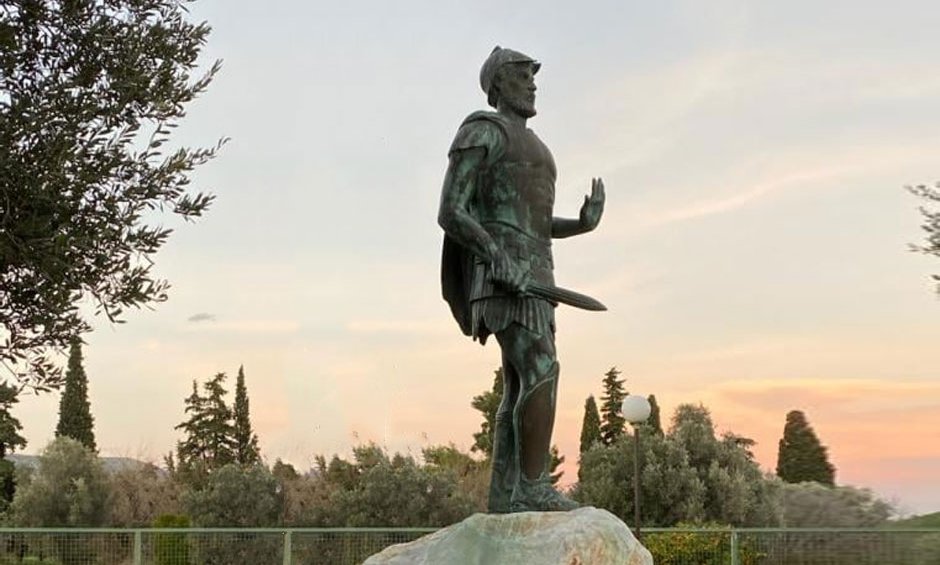
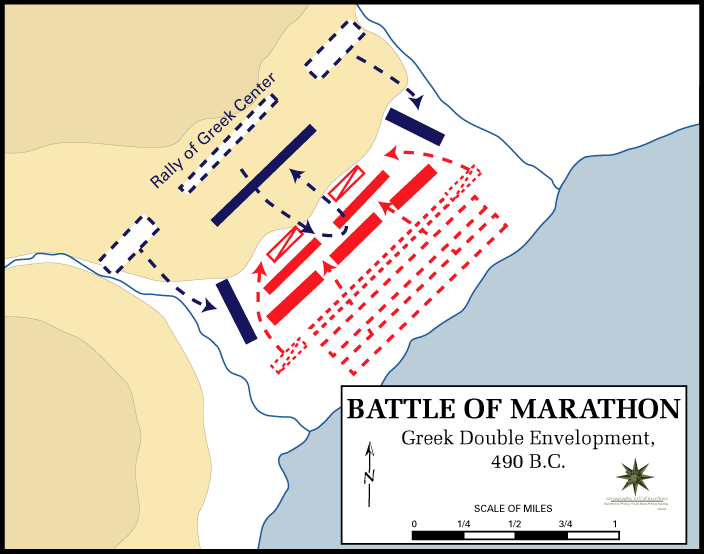
The Athenian general Miltiades devised a strategy of deliberate genius: he thinned the center of his battle line to prevent encirclement and reinforced both wings, enveloping the Persian force from the flanks as it pushed through the middle. The Persians lost over 6,400 men. The Athenians lost exactly 192. The victory was so decisive, and the odds so apparently impossible, that it became the defining legend of Athenian military identity for generations. Ten years later, a young general named Themistocles — who had fought at Marathon and learned from everything Miltiades had done — used the same fearlessness to destroy the Persian fleet at the Battle of Salamis in 480 BC, ending the Persian threat to Greece for good. Our blog has a full account of the life of Themistocles [LINK: https://blog.greeceathenstours.com/life-of-themistocles/] for those who want to follow that story further.
Pheidippides & the Birth of the Marathon Race
After the battle, an Athenian runner named Pheidippides made the roughly 40 km run from Marathon to
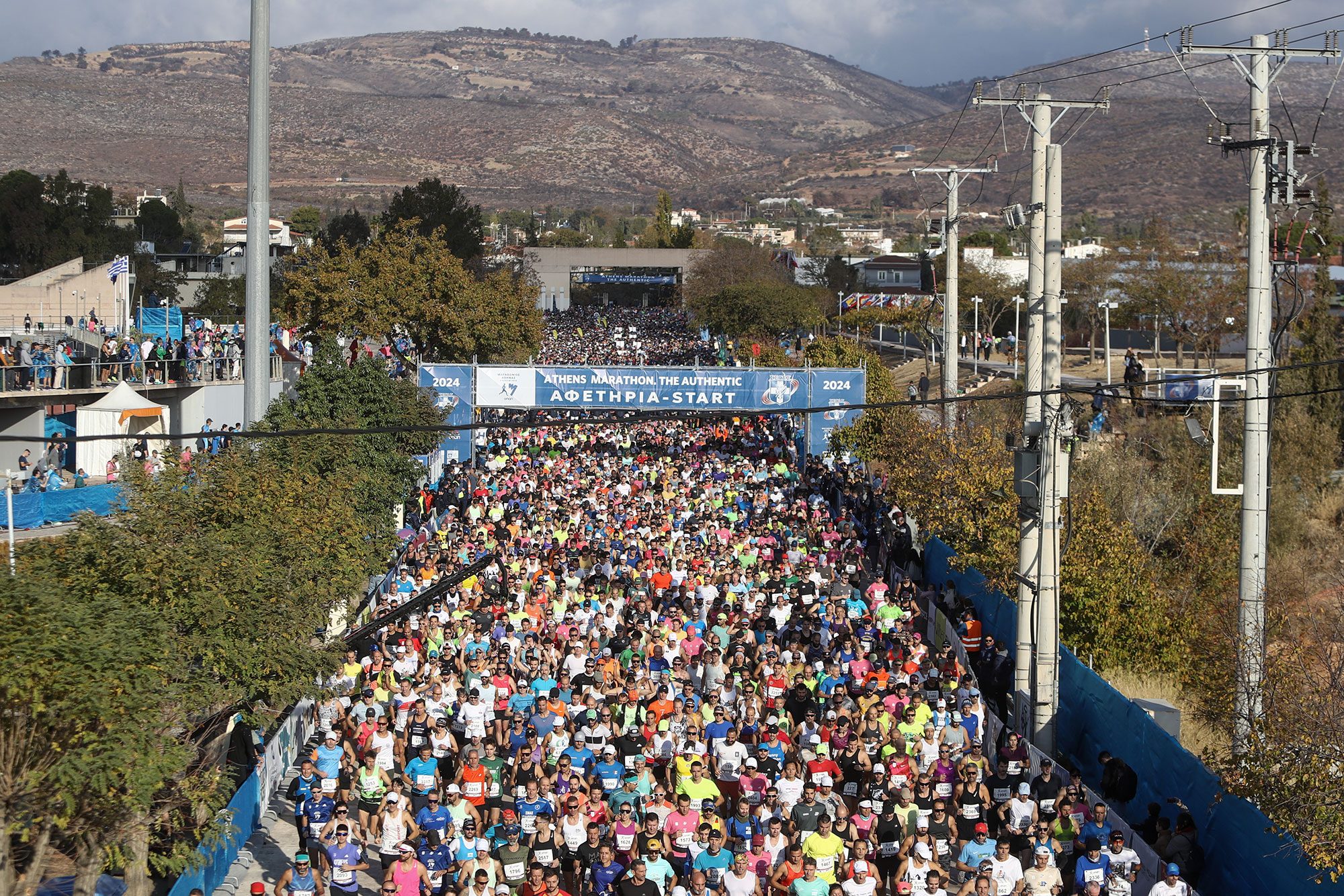
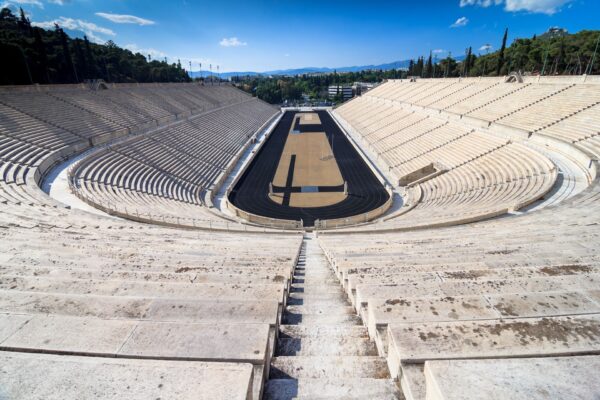
Athens to deliver the news of victory. Exhausted from both the fighting and the run, he delivered a single word — Nenikamen, "we have won" — and died. That act of sacrifice and devotion became the inspiration for the modern marathon race, first run at the Athens Olympics of 1896, finishing at the Panathenaic Stadium. Every November, the Athens Classic Marathon follows the same route — from the plain of Marathon to the marble stadium in the city — as tens of thousands of runners from across the world retrace those ancient footsteps. If you're visiting Athens around that time, our blog covers everything you need to know about the Athens Classic Marathon.
The Marathon Archaeological Museum
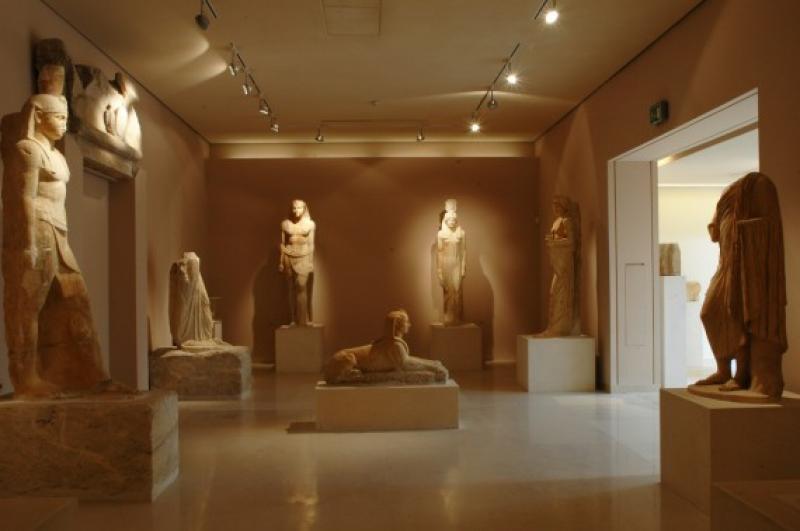
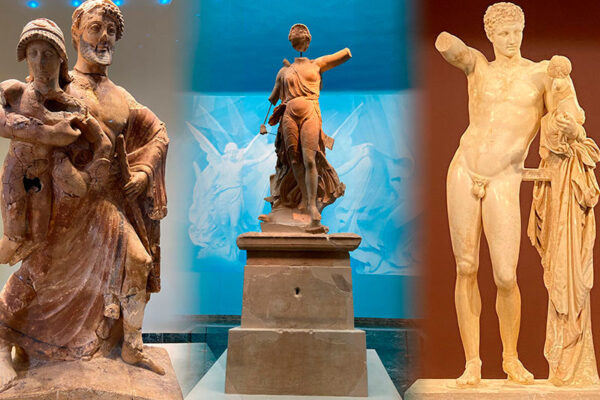
A short walk from the Soros, the Marathon Archaeological Museum holds a collection that is far more surprising than most visitors expect among the exhibits: Egyptian statues of Osiris and Isis, brought to Attica by an Egyptian community that settled in the area in antiquity — a reminder that the ancient Mediterranean was far more connected than we sometimes imagine.
The memorial column erected by the Athenians after their victory originally stood 10 meters tall and was crowned with a statue of Nike, the goddess of victory. You'll also find statues of the Roman senator Herodes Atticus and his wife Regilla, items from Neolithic settlements in the area, and artifacts spanning the full range of Attic history. Optionally, the nearby Marathon Running Museum offers a dedicated collection covering the history of marathon running worldwide — routes, records, winners, medals, and the global story of the race that began on this plain.
The Sanctuary of Artemis at Vravrona — Myth, Ritual & the Sacred Life of Women
Iphigenia, Artemis & One of Mythology's Most Powerful Stories
A short drive south along the eastern Attic coast brings you to Vravrona — known in antiquity as Brauron — and to one of the most important and least visited ancient sanctuaries in all of Attica. The site sits in a fertile valley where the Erasinos River once met the Aegean, surrounded by wetlands rich with birds and wild herbs. It is quieter than the Acropolis, less famous than Delphi, and all the more atmospheric for it.
The sanctuary's mythological origins are inseparable from the story of Iphigenia, the daughter of Agamemnon. Before the Greek fleet could sail for Troy, the goddess Artemis becalmed the winds at Aulis and demanded a sacrifice: Agamemnon's own daughter. The versions of the myth differ at their crucial moment. In the most widely told, Artemis intervened at the last instant — substituting a deer for Iphigenia on the altar and spiriting the girl away to the land of the Taurians (modern Crimea), where she became a priestess in a remote temple of Artemis.
Years later, her brother Orestes arrived in Tauris, recognized his sister, and together they escaped — bringing with them a sacred wooden cult image of Artemis. According to Attic tradition, Iphigenia landed at Brauron on her return and established the sanctuary there, serving as its first high priestess until her death. A cave shrine within the sanctuary was identified as her tomb, and women who died in childbirth had their garments dedicated to her there, their names carved in stone.
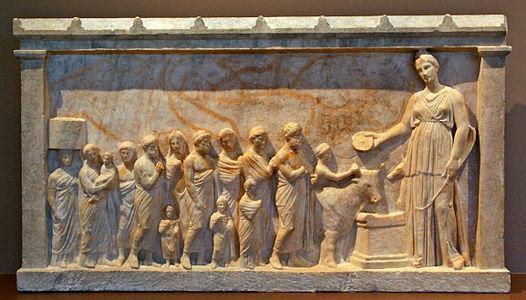
The sanctuary was one of the most important religious sites for women in the ancient Athenian world. Artemis Brauronia was worshipped here as the protector of pregnant women, women in labor, and newborns — the goddess who governed the dangerous threshold between life and death at the moment of birth. Women dedicated offerings to her in the hope of a safe delivery; after a successful birth, they returned with their clothing in gratitude.
The Arkteia — The Bear Festival and the Girls Who Became Bears
Every four years, the sanctuary hosted one of the most unusual religious festivals in the ancient world: the Arkteia, or Bear Festival. Athenian girls between the ages of five and ten, dressed in crocus-yellow robes, were brought to Vravrona to serve the goddess in a ritual initiation that prepared them for womanhood. They lived at the sanctuary for a period, performing races, dances, and ceremonies in which they imitated she-bears — animals that were sacred to Artemis, particularly in Arcadia. The rite was a controlled passage through wildness: by embodying the bear, the girls were believed to shed the untamed freedom of childhood and become ready for the ordered world of marriage and adult life.
The myth behind the ritual is typically Greek in its layers: one tradition holds that the festival began as atonement after an Athenian killed one of Artemis's sacred bears. Another says it was a ritual re-enactment of the near-sacrifice of Iphigenia herself — girls dramatically shedding their garments as she had done at the altar. Both traditions may have been true simultaneously. The Greeks were comfortable holding contradictory myths in parallel, understanding them as different angles on the same sacred truth.
The Archaeological Site & Museum
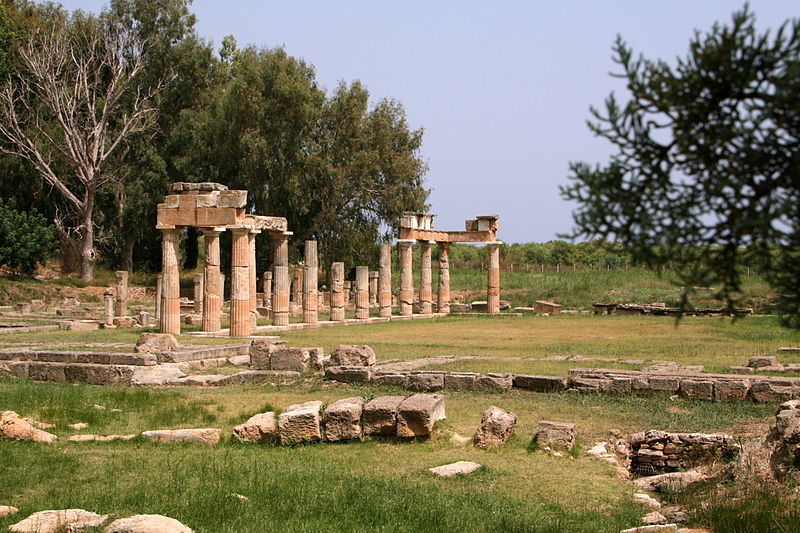
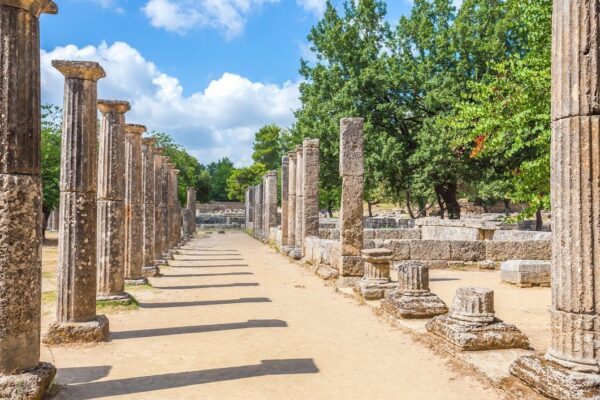
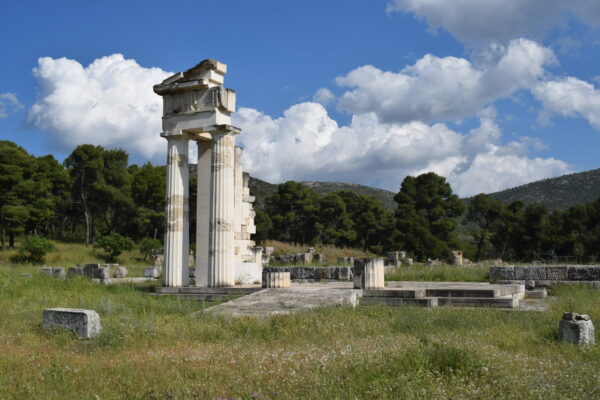
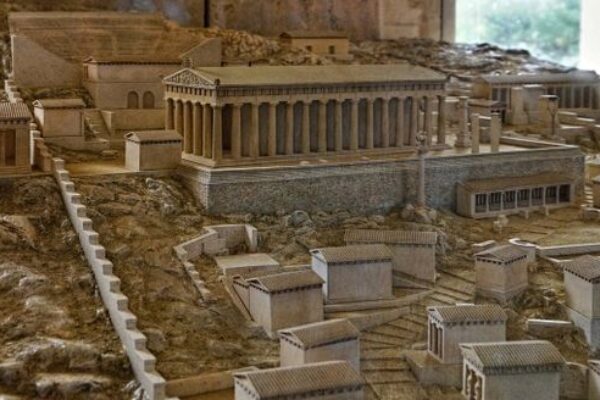
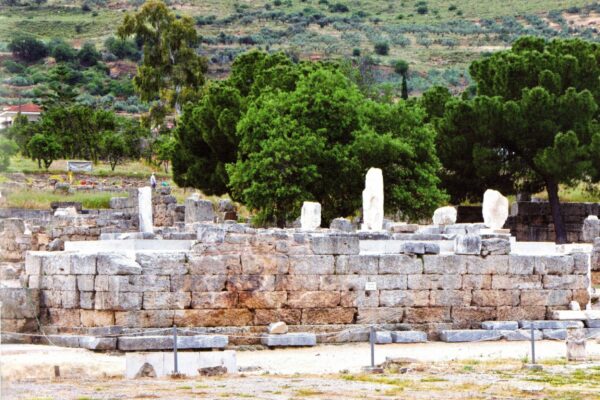
Walking the site today, the most visible surviving structure is the Pi-shaped stoa — a broad colonnaded courtyard built between 425 and 420 BC, open on one side toward the temple. The stoa contained dining rooms used for ritual feasting and displayed votive statues behind its colonnade. The temple of Artemis itself stood on slightly elevated ground to the northwest; only the foundations survive, topped today by a small post-Byzantine church built in the 15th century using stone from the ancient structure.
The sacred spring, still bubbling from an underground source connected to the Erasinos River, is visible just west of the temple. A unique classical-era stone bridge — 9 meters wide, spanning an 8-meter gap across the Erasinos River — survives as one of the oldest bridges in Greece.
The cave shrine of Iphigenia, carved into the hillside to the south, can still be identified. The sanctuary was abandoned around 300 BC after the river flooded and silted up the inlet, gradually distancing the site from the sea and disrupting the community that had sustained it for centuries.
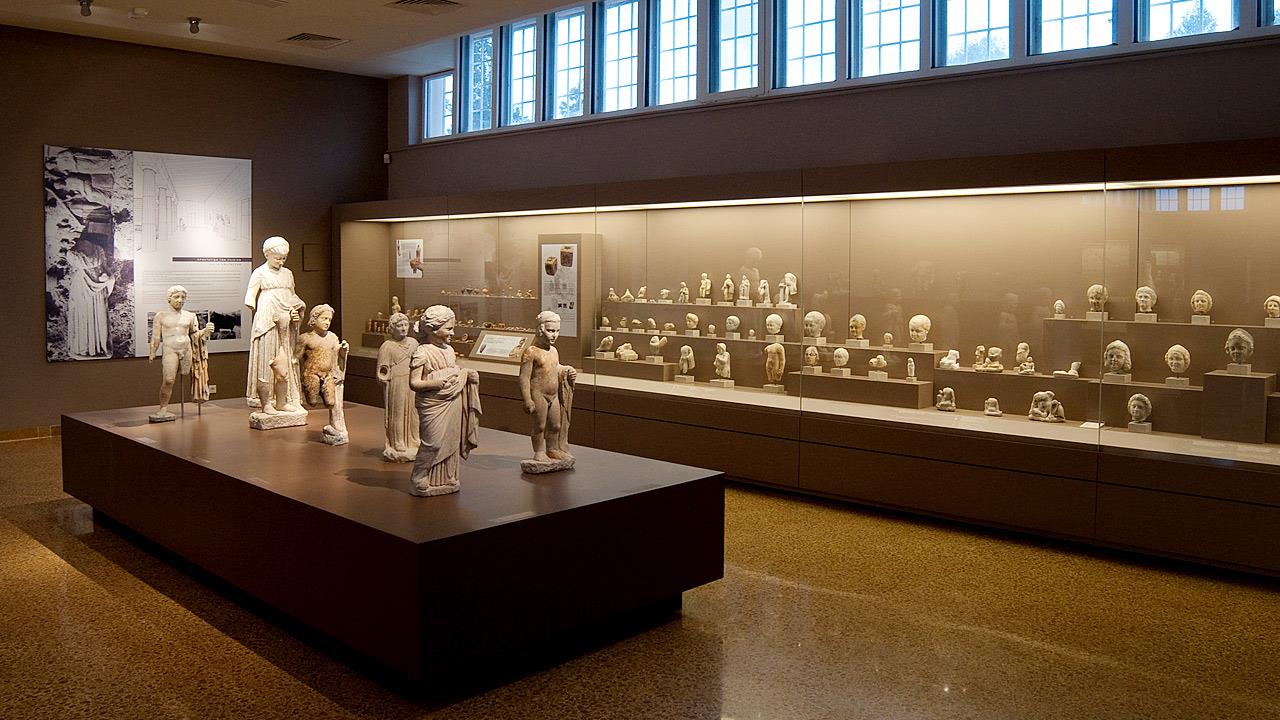
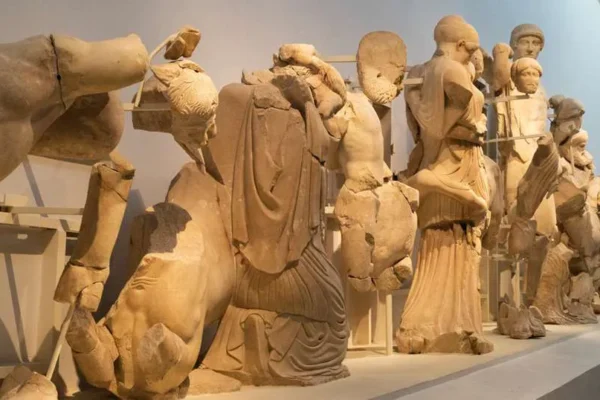
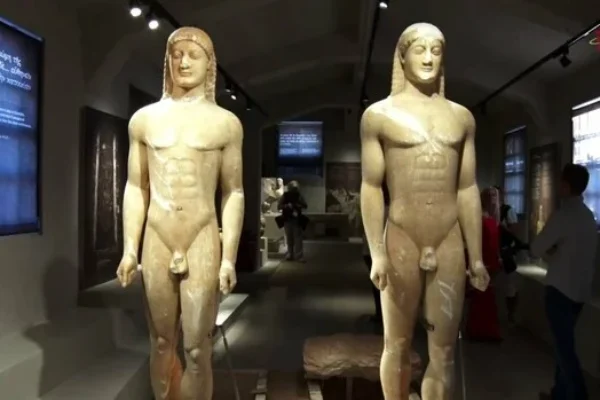
The Vravrona Archaeological Museum, located a short walk from the site, holds one of the most important collections in Attica — exhibits spanning from the early Bronze Age through the Roman period. The star exhibits are the marble statues of young girls (the arktoi) dedicated to Artemis, some of the most tender and human sculptures to survive from the ancient Greek world. You'll also find jewelry boxes, mirrors, and intimate votive objects from women's lives, miniature kraters depicting girls dancing and racing, and a collection of finds from across the Mesogeia region of Attica.
The Marathon Route — History Along the Road
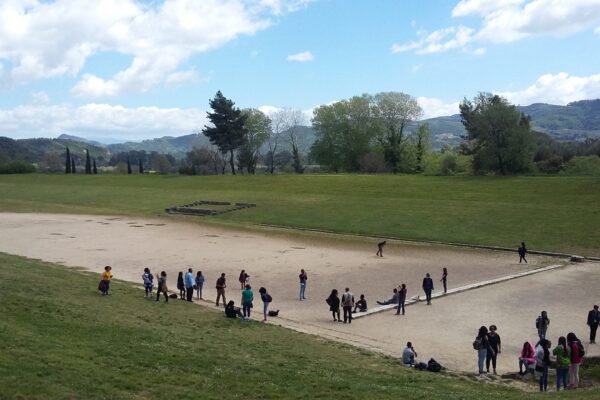
The tour follows the same road that Pheidippides ran in 490 BC and that thousands of marathon runners retrace every November. Your guide will point out landmarks along the classical Marathon route as you drive — the coastal plain where the battle unfolded, the hills that framed the Persian landing, and the landscape that has changed surprisingly little since the ancient world. The marathon race ends, as it always has, at the Panathenaic Stadium in Athens — the only stadium in the world built entirely of marble, which hosted the first modern Olympic Games in 1896.
Practical Information
Tour duration: Approximately half a day (4 to 5 hours including transfers).
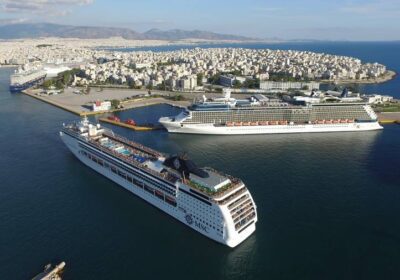
Departures: Pick-up from your hotel, Airbnb, or cruise ship at Piraeus.
What to wear: Comfortable walking shoes. The Marathon Soros and Vravrona site involves walking on uneven ground. Sun protection is recommended between April and October.
Best time to visit: The tour runs year-round. Spring and autumn offer the most pleasant conditions. If you're visiting Athens in November, timing the tour around the Athens Classic Marathon weekend adds a remarkable extra dimension to the experience.
Getting more from Athens: If this tour has opened up your appetite for the history of Attica, our guide to the best places to visit in
Greece covers the wider country, and our blog on the
climate of Greece helps with planning the right time to travel.
Why This Tour Matters
The Marathon tour from Athens covers ground that most visitors to Greece never reach — and that is precisely what makes it valuable. The Soros connects you directly to a moment when the future of democracy genuinely hung in the balance, defended by fewer than 11,000 men against an empire. Vravrona connects you to something quieter and equally profound: the intimate religious life of Athenian women, the myth of Iphigenia, and a sanctuary where the relationship between mortals and the divine was negotiated in the most personal terms imaginable — through the safety of mothers and children, and the passage of young girls into adult life.
These are not the famous sites. They are the sites that make the famous ones make sense.
Book your Marathon tour from Athens today — and discover the history that lies just beyond the city limits.