
How Many Days to Spend in Athens, Greece?
The honest answer to the question: How many days to spend in Athens, Greece? is two days minimum, three days ideal. Athens is compact enough that its major landmarks are all reachable on foot or within a short drive of each other — but it is layered enough that a single day leaves you with the uncomfortable feeling of having skimmed the surface of something genuinely extraordinary. Two to three days gives you enough time to see the city properly, eat well, and leave with a real sense of the place rather than a blurred sequence of monuments.
Here is exactly how to use those days.
Day 1 — The Acropolis, the Ancient City & the Neighbourhoods
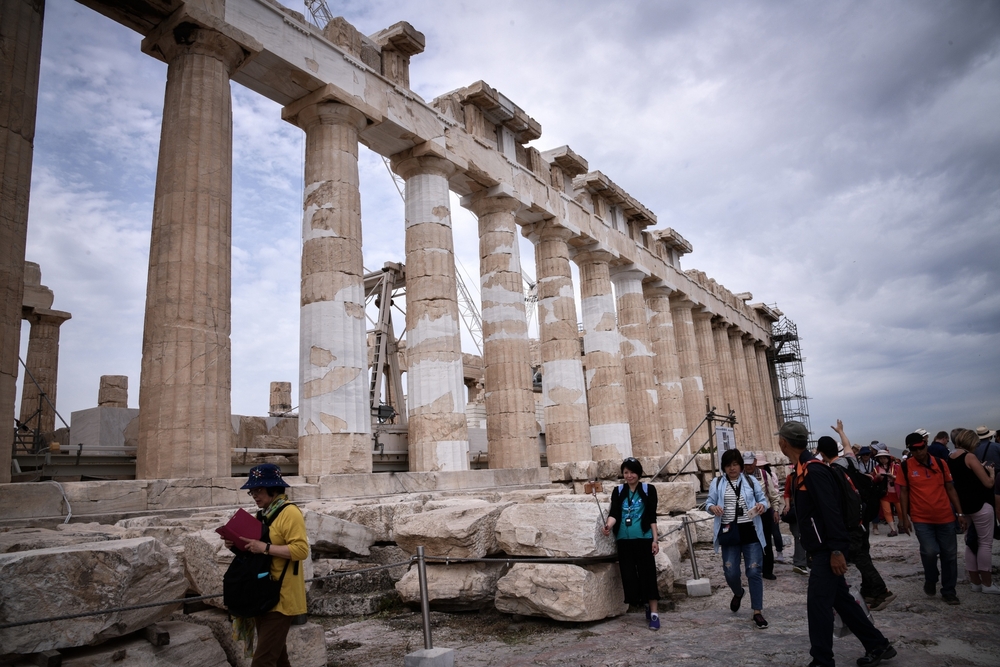
The first day belongs to the ancient city, and it starts at the Acropolis. Built under Pericles between 447 and 406 BC, the sacred precinct is the finest surviving example of classical Greek architecture on earth — the Parthenon, the Erechtheion with its Porch of the Caryatids, the Temple of Athena Nike, and the Theatre of Dionysus, the first theatre ever built in the world, where Sophocles and Aristophanes premiered their plays for audiences of up to 17,000. Below the hill, the Areopagus — Mars Hill — is where the Apostle Paul preached to Athens in 51 AD and where the ancient court of justice once convened. The view of the Acropolis from that rock is one of the best in the city.
After the Acropolis, the New Acropolis Museum is the natural next step — one of the finest archaeological museums in Europe, built specifically to house the sculptures from the hill above, with the top floor aligned precisely with the Parthenon so you can study the frieze sculptures in natural light while the monument is visible through the glass behind them.
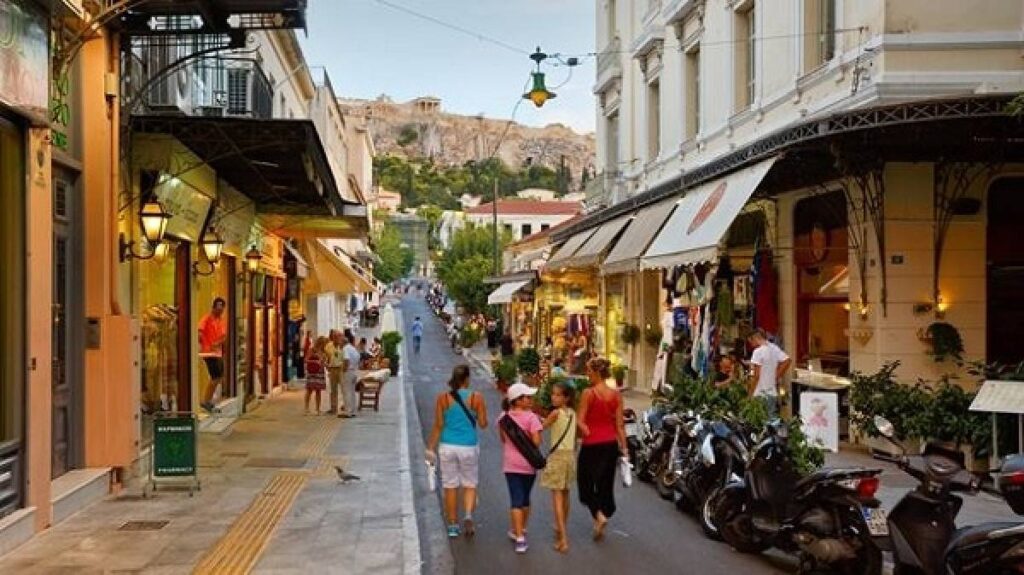
The afternoon is for the neighbourhoods. Plaka — the oldest continuously inhabited neighbourhood in Athens — and Monastiraki offer the most concentrated and authentic street-level experience of the city: Byzantine churches, neoclassical houses, the ancient Agora, and the flea market, all within walking distance of each other. This is where you eat your first proper Greek meal, wander without a plan, and let the city settle in.
A full guided Athens tour covers all of this in a single well-paced day — including skip-the-line Acropolis entry, the museum, the key classical landmarks, and free time in Plaka.
Day 2 — Classical Athens, Lycabettus Hill & the Food Scene
The second day fills in everything that the first day set up. Start at the Panathenaic Stadium — the only stadium in the world built entirely of white Pentelic marble, host to the first modern Olympic Games in 1896 — and the Temple of Olympian Zeus, with 15 of its original 104 Corinthian columns still standing at 17 meters each. At Syntagma Square, the changing of the Evzone guards at the Tomb of the Unknown Soldier is worth timing well. From there, the Athens Trilogy — the University, the Academy of Arts and Sciences, and the National Library, designed by Danish architect Theophil Hansen in the 19th century — lines one of the most architecturally distinctive streets in Europe.

The afternoon is the moment to go deeper into Athenian food culture. The Athens food tour covers the Varvakios Central Market — operating continuously since 1886 and the largest fresh fish market in Europe — alongside 15+ tastings at authentic spots where locals actually eat: regional cheeses, traditional pies, Greek coffee, mezedes, wine, rusks, and pastries made the same way for generations. Greek cuisine carries the fingerprints of ancient Greece, Byzantium, the Ottoman centuries, and the Asia Minor refugees of 1922 — every dish has a history, and a good guide will tell you what it is.
End the day at Lycabettus Hill — at 277 meters, the highest point in Athens, almost double the height of the Acropolis — for the best panoramic view of the city, ideally at sunset.
Day 3 — A Day Trip Beyond the City
If you have a third day, leave Athens entirely. The city is an extraordinary base for some of the best day trips in Greece, and spending at least one day in the wider region makes the Athens experience significantly richer.
The two best options, depending on your interests:
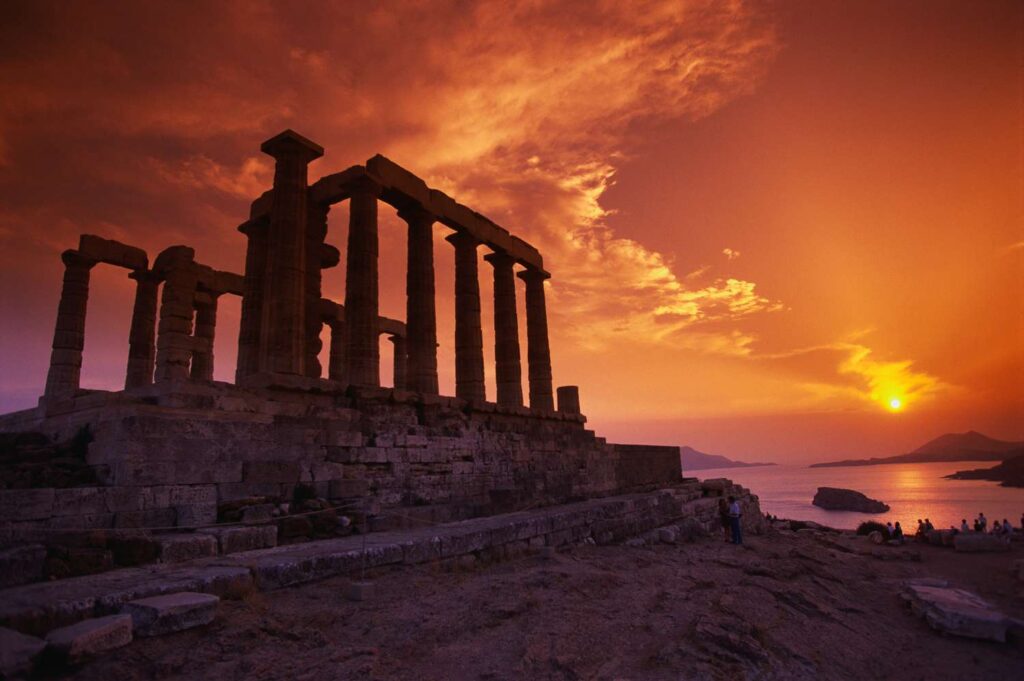
The Cape Sounion tour takes you south along the Athenian Riviera to the Temple of Poseidon, built between 444 and 440 BC on a headland 60 meters above the Aegean — one of the most dramatic ancient sites in Greece, particularly in the late afternoon when the light turns the marble gold. A stop at Lake Vouliagmeni on the way — a thermal lake fed by underground springs that maintains a constant temperature between 22 and 29°C year-round — makes the journey as enjoyable as the destination.
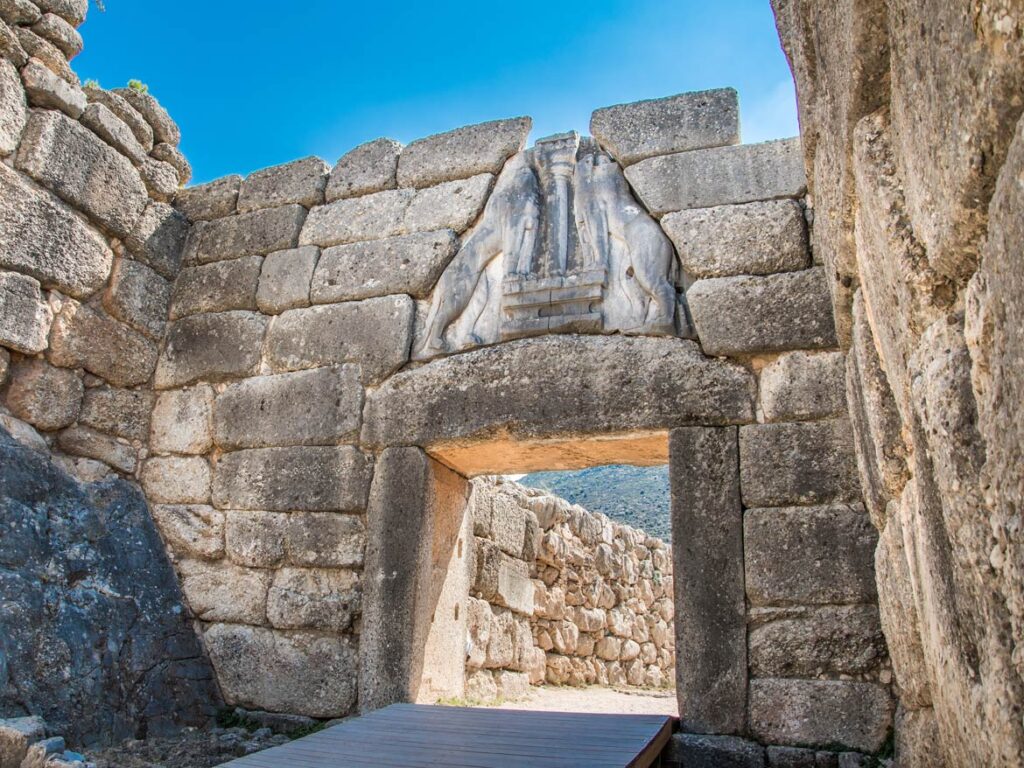
The Argolis day trip heads into the Peloponnese: the Lion Gate at Mycenae (built around 1250 BC, the oldest monumental sculpture in Europe), the theatre of Epidaurus with its extraordinary acoustics, and lunch in Nafplion — Greece’s first modern capital and consistently one of the most beautiful towns in the country.
Both can be done comfortably as a full-day private tour returning to Athens in the evening.
One Day Cruise- Visit 3 Islands in One Day
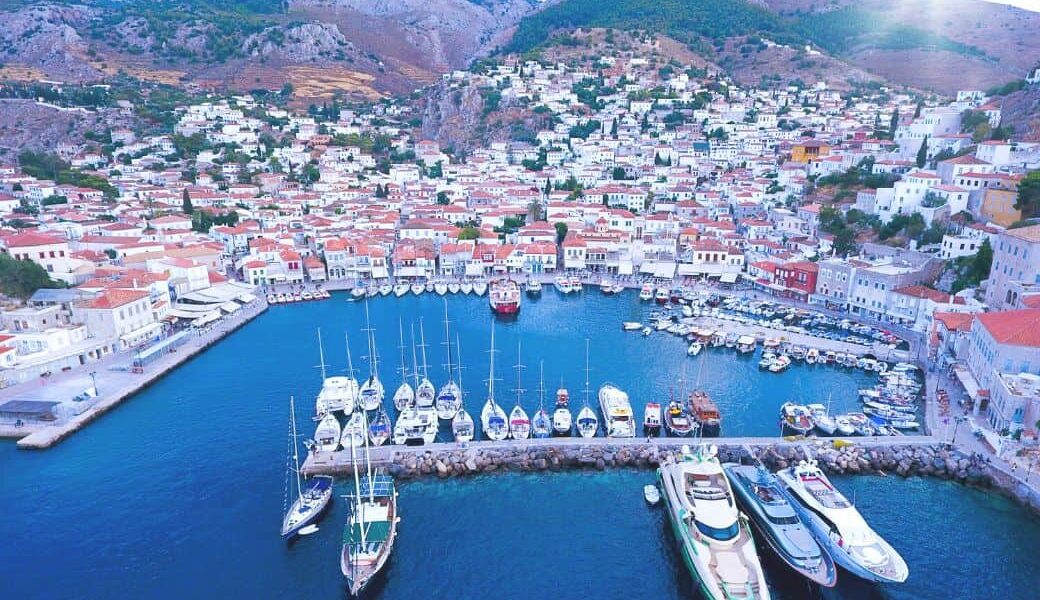
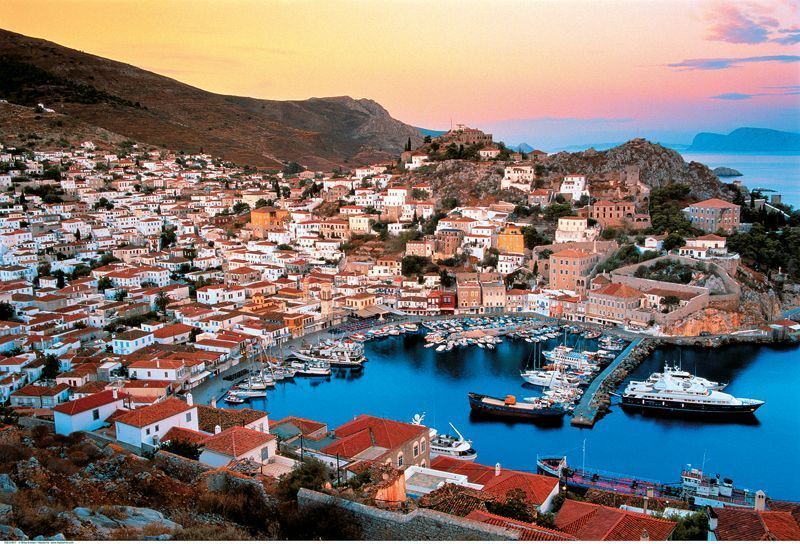
A third option — and one of the most popular day trips from Athens, particularly in summer — is the one-day cruise to the three Saronic Gulf islands of Hydra, Poros, and Aegina. The cruise departs from Piraeus early in the morning and visits all three islands in a single day, with free time on shore at each stop. Hydra is the highlight for most visitors — a car-free island where donkeys are still the main form of transport, its stone mansions and cobblestone alleys completely unchanged from the 19th century. Poros, separated from the Peloponnese by a narrow strait barely 200 meters wide, offers a quieter, pine-scented harbour and the kind of unhurried Greek island atmosphere that is increasingly hard to find.
Aegina, the largest of the three and the first capital of modern Greece in 1826, combines a lively waterfront fish market, the Temple of Athena Aphaia — a remarkably well-preserved 5th-century BC Doric temple considered a forerunner of the Parthenon — and the island’s famous pistachios, sold at every corner. A Greek-Mediterranean buffet lunch is served on board between islands, and live music and folk dancing on the return sail make the journey back to Piraeus as enjoyable as the destinations themselves. For swimmers, the crystal-clear waters around each island offer some of the best swimming accessible from Athens — pack a swimsuit and make the most of it.
What About More Than 3 Days?
Four or five days in Athens allows you to add the Athens by Night tour — illuminated monuments, a traditional Greek dinner in Plaka with live bouzouki music and folk dancing — and a more relaxed pace across the other days. It also makes Athens a genuine base for the classical tour of Greece, combining the Peloponnese, Delphi, and Meteora across four days of some of the most rewarding travel in Europe.
That said, for most visitors — especially those combining Athens with the islands — two to three days is the right amount. Enough to see everything that matters, enough time to eat well and walk slowly, and enough of a reason to come back.
Practical Tips for Planning How Many Days to Spend in Athens, Greece
The Acropolis fills quickly after 9 am between May and October — book tickets online in advance to avoid losing an hour in the queue. Early morning visits, before the cruise ship groups arrive, offer the best experience of the site. The city is walkable in the centre but hilly around the Acropolis — comfortable shoes matter more here than almost anywhere else in Europe. And if you are arriving by cruise ship at Piraeus with only one day in port, a private guided Athens tour is by far the most efficient and rewarding way to use that time.
Athens is one of those cities that rewards return visits. But even two well-spent days will leave you understanding why it has been worth visiting for 2,500 years.